Social Media Marketing: How Does It Help Businesses Grow Online?
Have you ever discovered a new brand while scrolling through Instagram? Or purchased a product after watching a video on Facebook? These everyday experiences show how social media influences the way people discover and interact with businesses.
Today, platforms such as Instagram, Facebook, YouTube and LinkedIn are not just used for entertainment and communication. They have become important tools for businesses to promote products, connect with customers and build their online presence.
But how does this process work? Why do businesses invest time and money in social media, and what makes their marketing successful?
Let's understand the basics of social media marketing, its different approaches and how businesses can use it effectively.
Why Are Businesses Using Social Media to Promote Their Products?
Social media allows businesses to reach people without depending completely on traditional advertising methods.
Platforms such as Instagram and Facebook help brands showcase their products, communicate with customers and share updates.
For example, a furniture business can post pictures of its latest collections, share interior design ideas and respond to customer enquiries.
This helps businesses increase visibility, build trust and connect with potential customers.
Can Social Media Really Help a Small Business Grow?
Yes! Social media provides opportunities for businesses of all sizes.
A small business does not always need a large marketing budget to build an online presence. It can start by creating useful content, interacting with followers and regularly sharing product information.
For example, a small bakery can showcase its cakes, share customer reviews and announce special offers through Instagram and Facebook.
With consistent effort, social media can help small businesses attract customers and develop their brand.
Which Social Media Platform Is Best for Marketing?
The best platform depends on the business, its audience and its marketing goals.
Some platforms are more suitable for visual content, while others are better for professional networking or video marketing.
Businesses should understand their target audience before choosing where to focus their marketing activities.
Being active on every platform is not necessary. Choosing the right platforms is more important.
Understanding the Major Social Media Platforms
Each social media platform has different features and marketing opportunities.
✓ Instagram: Used for photographs, reels, stories and visual brand promotion.
✓ Facebook: Useful for business pages, communities, customer interaction and advertising.
✓YouTube: Suitable for tutorials, product demonstrations and long-form videos.
✓ LinkedIn: Focuses on professional networking, industry updates and B2B marketing.
✓ Pinterest: Helps users discover visual ideas related to fashion, home decor, design and lifestyle.
Understanding these platforms helps businesses select the most suitable channels for their marketing activities.
Do Businesses Need to Pay to Get More Reach on Social Media?
No. Businesses can reach audiences through both organic and paid marketing.
Organic marketing involves publishing content without paying for advertising. This includes regular posts, stories, reels and audience interactions.
Paid marketing involves spending money to promote content and reach selected audiences through advertisements.
Both methods can be useful. Organic marketing helps build relationships over time, while paid campaigns can provide additional visibility and targeted reach.
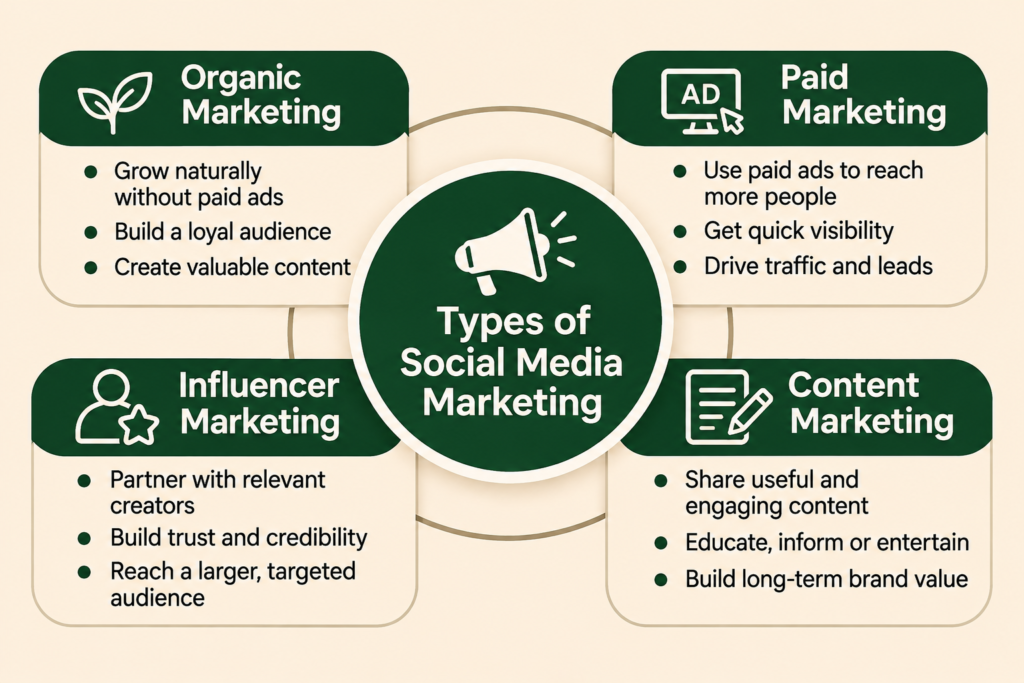
Types of Social Media Marketing
Social media marketing includes different approaches that help businesses achieve their objectives.
Organic Social Media Marketing
Focuses on building an audience through unpaid content such as posts, stories, reels and videos.
Paid Social Media Marketing
Uses advertisements to promote products, services and campaigns to specific audiences.
Influencer Marketing
Involves collaborating with content creators or influencers who introduce a brand or product to their followers.
Content Marketing
Focuses on sharing valuable and informative content to attract and engage an audience.
These approaches can be combined to create a stronger social media marketing strategy.
Content Creation and Planning
Content is one of the most important parts of social media marketing. Businesses need to publish content that attracts attention and provides value to their audience.
Common content formats include:
– Images and promotional graphics.
– Reels and short-form videos.
– Educational posts and informative tips.
– Product demonstrations.
– Customer reviews and testimonials.
– Stories, polls and interactive posts.
A content calendar helps organise publishing dates, topics, platforms, captions and hashtags. Planning in advance makes it easier to maintain consistency.
Important Social Media Marketing Terms
Understanding common marketing terms helps beginners follow social media performance and strategy.
▸ Reach: Number of unique people who see a post.
▸ Impressions: Total number of times a post is displayed.
▸ Engagement: Interactions such as likes, comments, shares and saves.
▸ Hashtags: Words or phrases beginning with # that help categorise content.
▸ Target Audience: The specific group of people a business wants to reach.
▸ Conversion: When a visitor completes a desired action, such as purchasing a product or submitting an enquiry.
▸ Call to Action (CTA): A message that encourages users to take an action, such as "Shop Now", "Learn More" or "Contact Us".
Measuring Social Media Marketing Performance
Publishing content is only one part of social media marketing. Measuring its performance helps businesses understand whether their efforts are achieving their goals.
Some important performance indicators include:
● Reach and impressions.
● Engagement rate.
● Follower growth.
● Website clicks.
● Leads and enquiries.
● Sales and conversions.
Tools such as Instagram Insights, Facebook Insights and other analytics platforms help businesses monitor these results.
Social media marketing has become an important part of digital marketing. It helps businesses connect with audiences, introduce their products and build stronger online relationships.
Understanding common social media questions, choosing suitable platforms, creating quality content and analysing performance are all important steps towards effective marketing.
For beginners, learning these basics provides a strong foundation for exploring more advanced strategies.
Social media marketing is not just about posting content. It is about understanding your audience, sharing the right message and building meaningful connections.